
Accountability
One accountable lead and explicit roles for client, team, and specialists.
How we work
We organize work to reduce uncertainty early, validate continuously, and prevent clients from discovering risks only at the end.
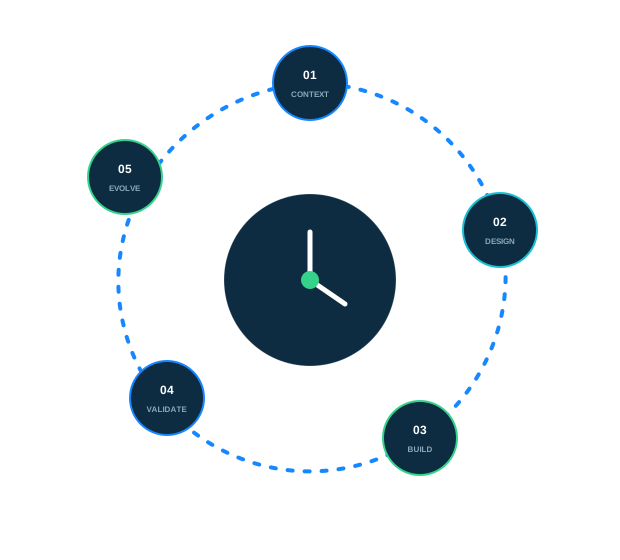
Delivery lifecycle
Outcome, users, current process, constraints, and decision owners.
Scope, priorities, acceptance criteria, dependencies, and risks.
Experience, domain, data, integrations, security, and operations.
Small increments, frequent review, and demonstrations with context.
Tests, configuration, data, monitoring, communication, and rollback.
Support, observation, incidents, learning, and new priorities.
Work governance
One accountable lead and explicit roles for client, team, and specialists.
Status, decisions, blockers, and next steps in direct language.
Observable criteria and evidence before closing a delivery.
Least access, confidentiality, ownership, and data treatment agreed.
Adaptable team
SOATECS is currently led by its sole owner. The founder retains the engagement and assembles independent support when a project needs additional capabilities.
Every addition must have a purpose, limited access, confidentiality obligations, and concrete responsibility. The client never loses visibility into the work or final owner.
Direction, architecture, and client relationship.
Design, development, QA, data, or operations as needed.
One quality and acceptance standard.
What we ask from the client
A structured conversation can reveal whether you need an assessment, a pilot, or a complete project.